
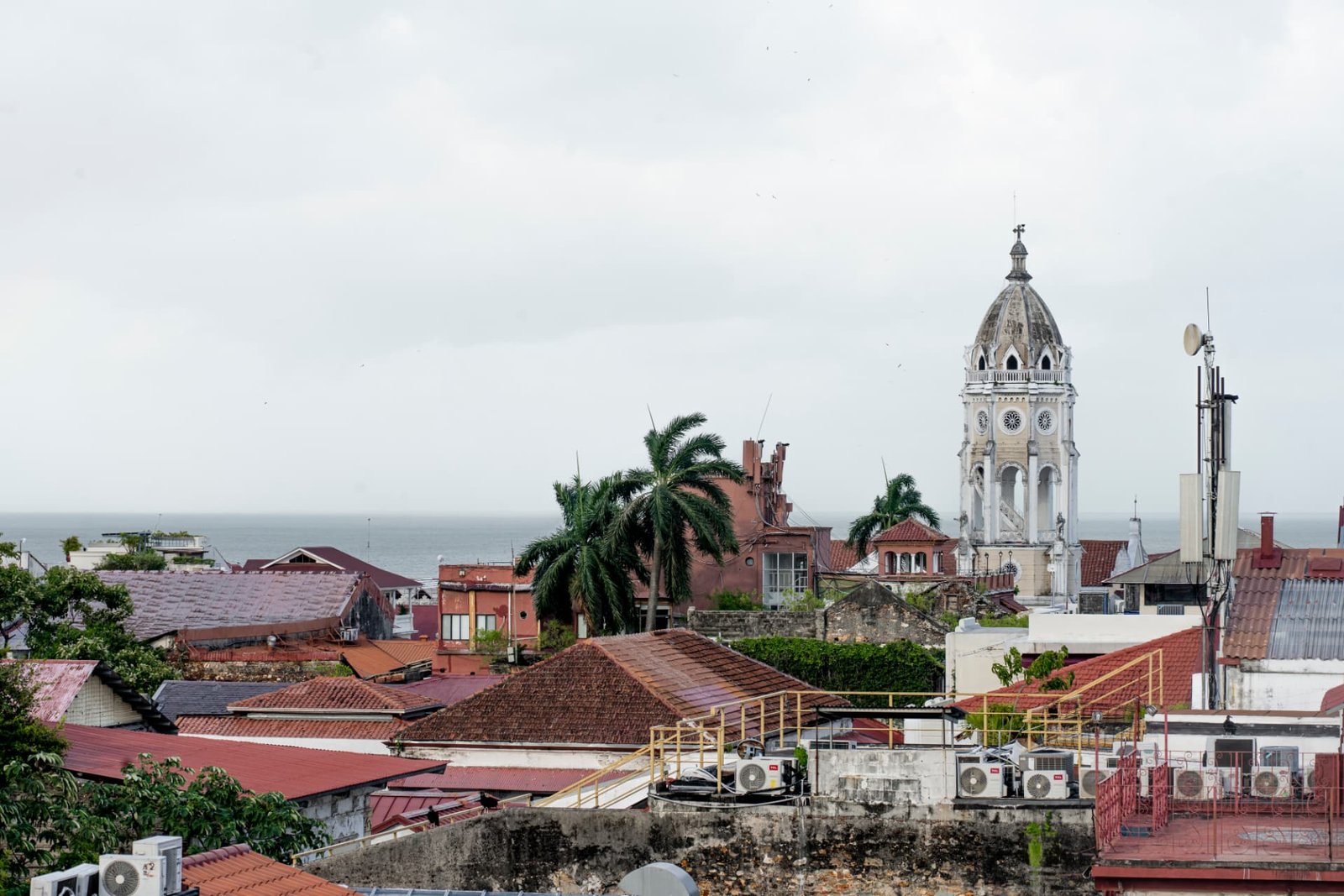

Casco Viejo Panama is Panama City's historic neighborhood: a colonial old town of cobblestone streets, plazas, wooden balconies and facades that mix Spanish, French and Caribbean styles, declared a UNESCO World Heritage Site in 1997. It sits on a small peninsula south of the city's center, separated from the bustle of the skyscrapers by just a few minutes. Today its streets hold restaurants, galleries, boutique hotels and a nightlife that spills onto the rooftops. If it's your first time in Panama, this is the neighborhood where you'll want to stay.
— The Tántalo Hotel team, living and working in Casco Viejo since 2012.
A bit of history
The history of Casco Antiguo Panama begins in 1673, a year after the pirate Henry Morgan destroyed the original city —known today as Panamá Viejo— in 1671. The Spanish rebuilt the city on this peninsula, easier to defend, ringed by reefs and walls. Over the next three centuries, the neighborhood passed through Spanish, Colombian and French hands —during the failed French canal construction in the late 19th century— and finally became Panamanian after independence in 1903.
That mix of eras is why you can walk one block today and go from Spanish colonial architecture to French-influenced facades and Caribbean-style balconies. For much of the 20th century the neighborhood fell into neglect, until the 1997 UNESCO declaration kicked off a restoration process that continues today, building by building, mural by mural.
What to do
Plaza de la Independencia and Plaza Bolívar:
the neighborhood's civic heart, ringed by colonial architecture and cafés with tables outside.
Iglesia de San José and its golden altar:
one of Casco's most famous pieces, complete with a legend of colonial-era smuggling.
Casco Antiguo on foot:
you can cover the whole neighborhood walking in a couple of hours, with urban art and murals on nearly every block.
The ruins of Santo Domingo (Arco Chato):
remnants of a 17th-century convent, today a photographic icon of the neighborhood.
Plaza Francia and the Paseo de las Bóvedas:
open views of the bay and the skyscrapers across the water, ideal at sunset.
The rooftop scene:
Casco has one of the best rooftop bar scenes in all of Panama, with Tántalo among those who started it.
Galleries and local artists' workshops:
several streets in the neighborhood function almost like an open museum of Panamanian urban art.
The Seafood Market:
a few minutes on foot, great for fresh ceviche at local prices.
Where to eat and drink
Casco Viejo's food scene ranges from street stalls to chef-driven restaurants, almost always within walking distance. Inside Tántalo itself, Alura covers everything from morning coffee to dinner, with a Sunday brunch that's become a must-stop in the city and a signature cocktail list for the night.
Outside the hotel, the neighborhood mixes traditional Panamanian cooking, international offerings, and some of the best cocktail bars in the country. The general recommendation: take breakfast slow, have lunch near the plaza, and save your energy for the night — between restaurants and rooftops, Casco Viejo doesn't wind down early.
Is Casco Viejo safe?
The short answer: yes, Casco Viejo is safe to visit, as long as you take the same precautions you would in any big city's historic center. The tourist zone —from Plaza de la Independencia to Plaza Francia— has a steady tourist police presence and over two decades of investment and restoration behind it. Casco Viejo is safe at night on the main, busy streets, with people around and businesses open.
As with any historic neighborhood, it's best to avoid dimly lit or empty streets after a certain hour, avoid walking alone with valuables in plain sight on the less touristy edges of the neighborhood, and take a taxi or rideshare app between Casco and other parts of the city at night. Rule of thumb: if the street is lit and has people around, you're fine; if it's dark and empty, grab a taxi.
Best time to visit
Panama has two seasons: dry (mid-December to April) and rainy (May to mid-December). Dry season is the most popular time to visit Casco Viejo: clear skies, dry streets for walking, and the best sunsets from the rooftops. Rainy season doesn't mean rain all day — showers usually hit in the afternoon, with sunny mornings — and it comes with the upside of fewer tourists and better room rates. Any time of year works if you pack for constant tropical heat (82–90°F / 28–32°C year-round) and a light raincoat between May and December.
Where to stay
The best base for exploring Casco Viejo is staying inside the San Felipe district itself, on foot from everything: plazas, restaurants, galleries and the nightlife, without depending on taxis to get to where things are happening. Tántalo Hotel sits in the heart of Casco, on Calle 8 Este and Avenida B, with rooms designed by local artists, its own rooftop bar and the Alura restaurant on the ground floor. Instead of choosing between lodging, nightlife and culture, at Tántalo all three live under the same roof.
Map
Casco Viejo sits on the southern peninsula of Panama City, about 20–25 minutes by car from Tocumen International Airport and just minutes from the Cinta Costera and the modern city center.
Casco Viejo is best lived from the inside out: waking up in a room with original art, heading down to Alura for coffee, and climbing to the rooftop as the sun goes down. That's how you live Tántalo.